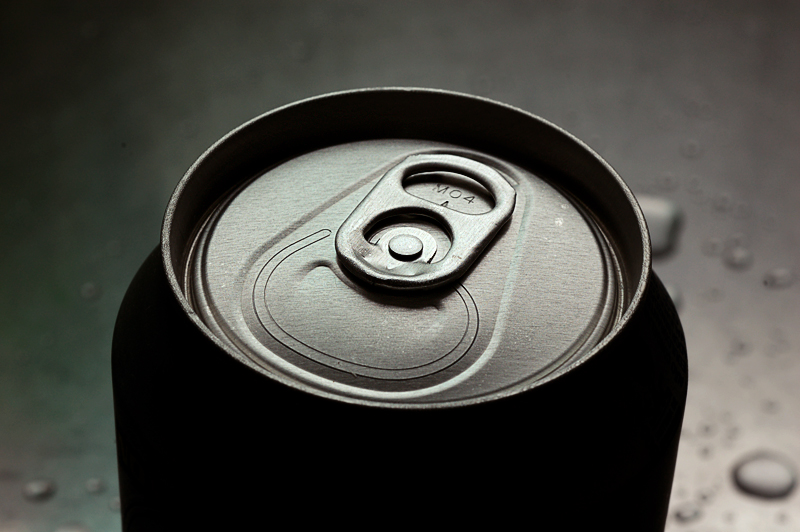
What do soft drinks, cigarettes and gasoline have in common? Benzene.
That's right. Cancer causing Benzene.
Soft drinks: Two the nation's largest soft drink manufacturers have just agreed to reformulate their soft drinks to exclude the known carcinogen Benzene, which forms when Ascorbic Acid and Sodium Benzoate (a preservative) combine in one product:
Safeway settles benzene soft drink suit
The supermarket market chain, Safeway Inc., has agreed to reformulate soft drinks made with ingredients that can potentially form benzene, according to a recent settlement. The company is one of several soft drink manufacturers that have recently been sued in class action lawsuits over benzene, a known carcinogen. Coca-Cola, a former defendant, agreed to settle last month.
Exposure to significant levels of benzene can lead to increased rates of bone marrow diseases, including leukemia.
http://tinyurl.com/...
The bad news? Not all companies are reformulating:
Other companies named in the lawsuit include: PepsiCo, Sunny Delight, Shasta and Polar.
Benzene:

What makes Benzene so scary? Here's what the CDC has to say:
Long-term exposure to high levels of benzene in the air can cause leukemia, particularly acute myelogenous leukemia, often referred to as AML. This is a cancer of the blood-forming organs. The Department of Health and Human Services (DHHS) has determined that benzene is a known carcinogen. The International Agency for Research on Cancer (IARC) and the EPA have determined that benzene is carcinogenic to humans.
http://www.atsdr.cdc.gov/...
How do you tell if you're drinking Benzene? Here's Consumer Reports' link for determining if benzene is in your beverages.
Both Coke and Pepsi say they have reformulated their drinks by removing ascorbic acid (but not the Sodium Benzoate or Potassium Benzoate...hmmm), but have admitted they don't know how much of their old product is on the shelf.
Also, it's not just ascorbic acid that combines to create Benzene:
Benzene can form in beverages containing benzoate salts (antimicrobials) and either vitamin C (ascorbic acid) or erythorbic acid, a related substance, if certain minerals are present. Heat or light during shipping or storage can increase the amount of benzene formed.
And it's not just in soda:
Benzene exposure can be reduced by limiting contact with gasoline and cigarette smoke. Families are encouraged not to smoke in their house, in enclosed environments, or near their children.
http://www.atsdr.cdc.gov/...
That's right. Cigarette smoke and gasoline.
And soda.
So what are government agencies doing about this? Not enough, according to this OP-ED in the SF Chronicle:
Too many agencies don't protect our food
GROUPS of consumers have prevailed in separate settlements announced over the past several weeks against Safeway stores and the Coca-Cola Co. in litigation aimed at forcing soft-drink manufacturers to reformulate their beverages so that a potential benzene-causing combination of ingredients will not be used in their drinks.
While news of the legal settlements is certainly good, there are many other manufacturers still hedging on their decision to reformulate. It shouldn't have to take legal battles filed by concerned consumers to stop an industry practice that is risky, can easily be avoided and should have been addressed by the government a long time ago. Why haven't the government agencies charged with protecting our food, beverages and water stepped in? Welcome to the alphabet soup of food safety regulation - where various agencies can impose varying rules that allow important safety issues to slip between agency jurisdictions...
http://www.sfgate.com/...
Hmm... Government agencies and food safety. Where have we heard this before?
Soft drinks, cigarettes and gasoline...
What does Consumer Reports think about all of this?
Consumers Union, the nonprofit publisher of Consumer Reports, thinks the FDA should restrict benzene in all beverages to the limit set for drinking water and require manufacturers to take steps to prevent benzene formation by changing the products’ formulation or manufacturing process.
Good idea.
Here's the link to the SF Chronicle Story.
Here's the link to the DHHS warning on Benzene in Soft Drinks.
Here's the link to the story about the lawsuit.
Here's the link to Consumer Reports' warning (this has product names)
I'm going to go make some fresh orange juice (from the oranges off the tree in my back yard) now.
Soda and gasoline and cigarettes, oh, my...

 SUBSCRIBE
 RSS
RSS California mixed media artist, Sara Zimmerman, has come up with an innovative idea to combine her passion for the visual medium with her love for the environment -- helping to save on the cost of materials along the way.
  Zimmerman, a fine artist working out of the Lake Tahoe area, has begun to utilize discarded cabinet doors, such as those replaced during construction, as well as paper and other recycled materials, as a mixed-media canvas for her art.
  With the Sierra region as both subject and inspiration, it's not surprising that the artist's work would reflect the beauty of the environment that surrounds her studio.
 By utilizing discarded materials, Zimmerman has provided an important example of how respect for the environment can help to preserve the subject of the art that it has inspired in its most pristine form.