HOME
POLITICS
CLIMATE
BUSINESS
SCIENCE
WORLD
HISTORY
LIFESTYLE
EDITORIAL
RESOURCES
CONTACT

Showing posts with label Huffington Post. Show all posts


Where to Buy Fair Trade Chocolate

Cross-posted on The Huffington Post

Given chocolate's status as a conflict substance, that ethical (and tasty!) chocolate is readily available. Why is this important? With Fair Trade chocolate:


  • Forced and abusive child labor practices are prohibited
  • Farming families earn a price that is adequate to meet their basic human needs
  • Environmentally sustainable production methods are required

Where to buy Fair Trade chocolate and other Fair Trade goods?


For more information on healthy foods, see: Do we need another Jungle?


Jerry Garcia as a Side Man: An Album 30 Years in the Making

Cross-posted on The Huffington Post

A few years ago, while visiting a friend, San Francisco singer-songwriter and producer, Bill Cutler, I noticed a stack of two inch reels in an open closet and asked him about them.

"Oh," he continued down the hall, "those are some of my songs I recorded with Jerry Garcia."

I looked back at the large stack of large multi-track tapes and then followed my friend down the hall and called after him, "Uh, Bill?"

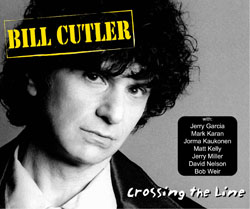
Now, a few years (and a great deal of work) later, that stack of two inch tapes is about to be released as a CD entitled: Crossing the Line (Magnatude/Ryko), due out in March and which will include the never-before-heard recordings of Cutler's six original songs with Jerry Garcia, as well as Bob Weir, Jorma Kaukonan, Jerry Miller, Mark Karan, David Nelson, Scotty Quik, Pat Campbell (among others), augmented by eight songs, also penned by Cutler, with many of the same (surviving) sidemen.

I received my advance copy this week and have diverted from my normal fare of environmental and political musings to write my reaction, after listening with a thoughtfulness that can only come from the revelation that someone one has known for a long time has more to offer than previously realized. That is because Cutler's CD, while of obvious historic value and unique in its musicianship, is also quite good. Strong songs, vocals and production values, with Garcia's work as a sideman in his instantly recognizable guitar solos on songs that are whole entities unto themselves. These are different from Garcia's work with the Grateful Dead, unique in presentation; an expression of Cutler's own songwriting and singing talent, which, it turns out, exists, in this writer's opinion, in abundance.

There is poignancy, as well, in the eighth track, entitled, "Starlight Jamboree," recorded as an instrumental by Cutler and Garcia from an idea about musicians playing with their deceased heroes at a Starlight Jamboree in the sky. Years later, (before his songs would take on a life of their own), Cutler, mourning the loss of his friend, added lyrics about Garcia. Which means that Garcia played as sideman on a song about a posthumous heavenly jam that ended up being, posthumously, about him.

Magnatude-Ryko has put up a three song pre-release for the upcoming CD here, with what most Grateful Dead and San Francisco music fans (the tracks include players from the Grateful Dead, Moby Grape, New Riders of the Purple Sage, Jefferson Airplane, Hot Tuna, Elvis Costello, Boz Scaggs and Sammy Hagar's bands, Kingfish, the list goes on...) might pick as their ultimate fantasy band. And all that from a stack of two-inch reels once stored in a dark hall closet, now scheduled for the light of day because of one talented musician, with iconically talented friends, who worked his heart out to record, remaster, and release a CD that was thirty years in the making.


The Plight of the Bumblebee


Cross-posted on Huffington Post, Earth911, Atlanta-Journal-Constitution, Austin American-Statesman, Palm Beach Post, Longview News-Journal

With all the focus on the disappearance of the honeybee, there has been little discussion about the plight of the bumblebee, one of the hardest workers in the wild world of agriculture, despite this warning issued by the National Academy of Sciences October 2006:

Long-term trends for several wild bee species -- especially bumblebees -- as well as some butterflies, bats, and hummingbirds... show population drops.
That focus may now change as word comes from scientists that at least one bumblebee species from the Northwestern region of the United States, Franklin's Bumblebee, may have gone extinct.

This is a serious development. Not only because the loss of any species due to human activity is, in this writer's opinion, unconscionable, but because we depend on this species more than we've taken the time to understand.

According to this newly released National Academy of Sciences report, the bumblebee is one of many pollinators losing their battle to survive because of 'habitat lost to housing developments and intensive agriculture, pesticides, pollution and diseases spilling out of greenhouses using commercial bumblebee hives.'

Like the honeybee, the bumblebee has been hurt by the introduction of a non-native parasite. Many pollinator declines are associated with habitat loss...

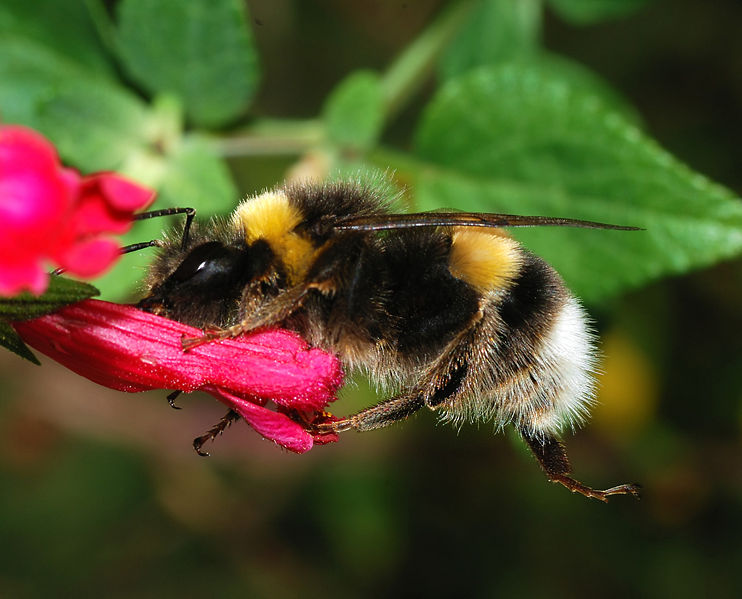
It turns out that our native American bumblebee (the honeybee was imported) does more than provide a pleasant bass note to the summer hum we hear outside our window amidst the lawn mowers, sprinklers and our children's laughter. The reality is that our humble bumblebee is one of the hardest workers in the wild, accounting for the pollination that provides food for bears and birds -- and for us -- by pollinating ~fifteen percent of U.S. crops. And that percentage has been growing as farmers turn to the lowly bumblebee to replace the disappearing honeybees.

Bumblebee advocates and the scientists raising the alarm about the disappearance of the Franklin's Bumblebee have begun to lobby congress for research money and are now asking farmers to set aside unused land for flowering plants. These requests, along with the new National Academy report, are vital calls to arms. For Franklin's Bumblebee, which has long added its bass note to the life and livelihood of the Pacific Northwest, it may be too late.

For the humble bumblebees still left, such measures are essential.